

How Physical Therapy Helps Pelvic Health
— April 2025 —
Are you living with symptoms you find difficult to talk about? Perhaps you’re struggling with incontinence or endometriosis. Maybe you’ve developed a pelvic organ prolapse.
While these conditions can sound scary, they’re very treatable. Unfortunately, they often stem from issues related to pelvic health, and many people will live with pain and discomfort due to being uncomfortable sharing their concerns.
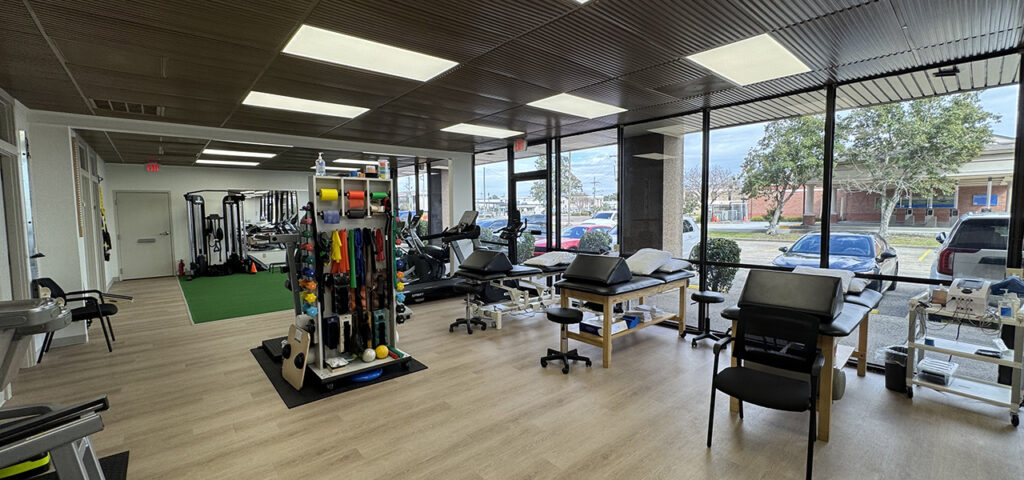
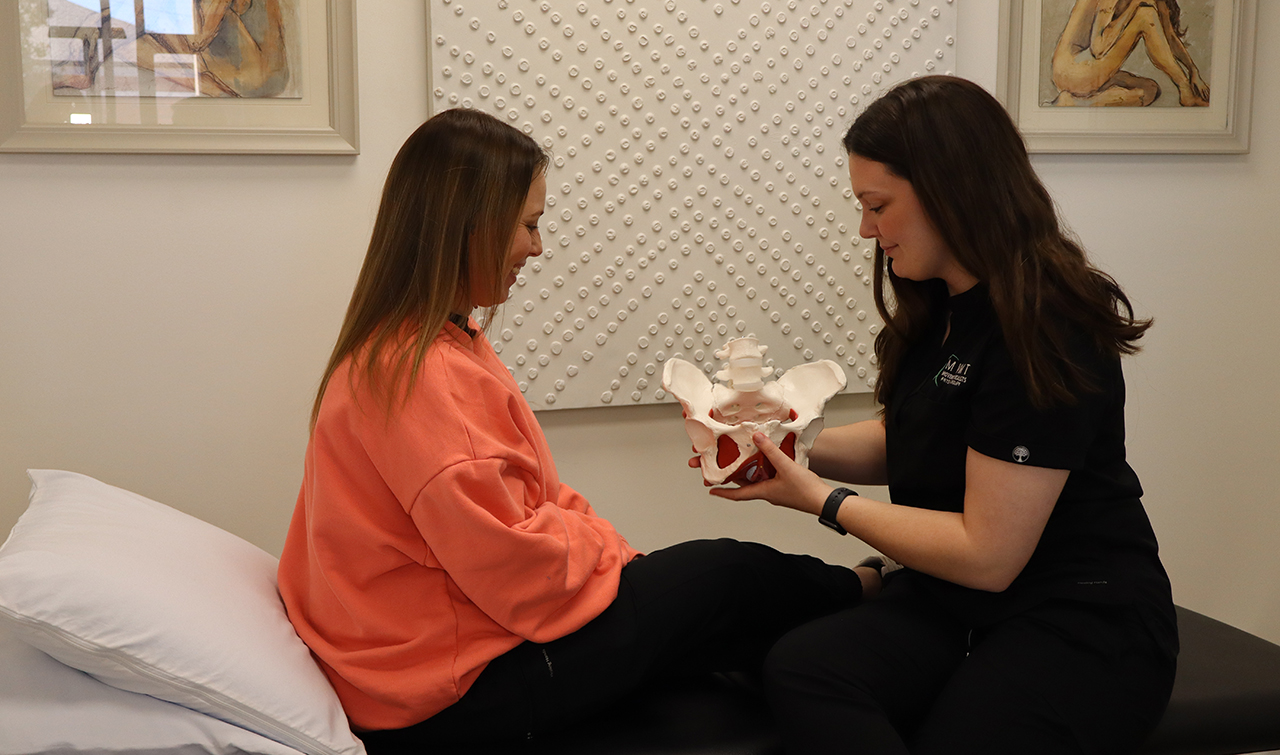
At Movement Specialists Physical Therapy, we want to change that. Our physical therapists frequently help people manage their pelvic health, offering private rooms and a judgment-free zone where you can share your symptoms and get the treatment you need.
Today, we want to explore pelvic health: what it is, how it can impact your life, and how our physical therapy services can help improve it.
Still have questions? Our friendly staff is happy to answer them. We’re just a phone call away!
What Do We Mean by Pelvic Health?
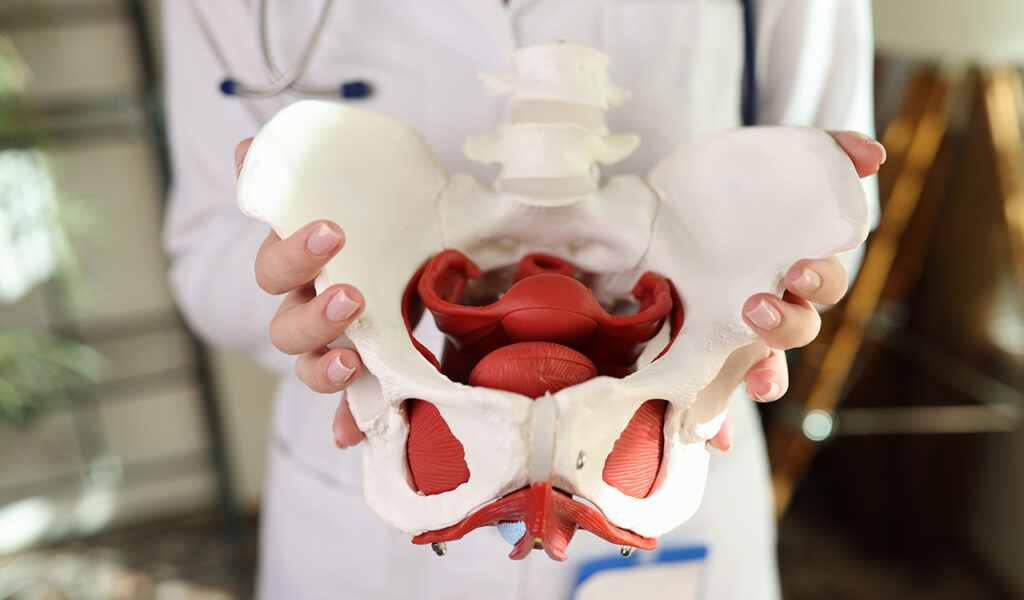
Your pelvic floor is a sling of muscles at the base of your core. It acts as a “hammock” for your pelvic organs, including your bladder, bowels, and sexual organs. When the pelvic floor is healthy, it supports those organs and helps them function properly. But when it becomes impaired – such as being weak or overly restricted – you can experience several different symptoms.
Anyone can experience issues with their pelvic floor, although the exact concerns can vary somewhat with gender. Here are some of the common complaints we help treat:
• Urinary Incontinence — Anyone can develop urinary incontinence, although it is more common in women. This can include stress incontinence (leaking when laughing or coughing), urge incontinence (having an overwhelming need to go), or a combination.
• Pelvic Pain — Pelvic pain can have a variety of causes, from nerve issues to gynecological conditions like endometriosis. We’ll help determine the cause and find the right treatment option for your needs.
• Pelvic Organ Prolapse — This occurs when the pelvic organs slip out of place. It develops due to weakened pelvic floor muscles.
• Pregnancy/Postpartum Discomfort — The changes that occur in your body during pregnancy can lead to pelvic and lower back pain, urinary incontinence, and other musculoskeletal concerns.
What Treatment Options Do We Offer?
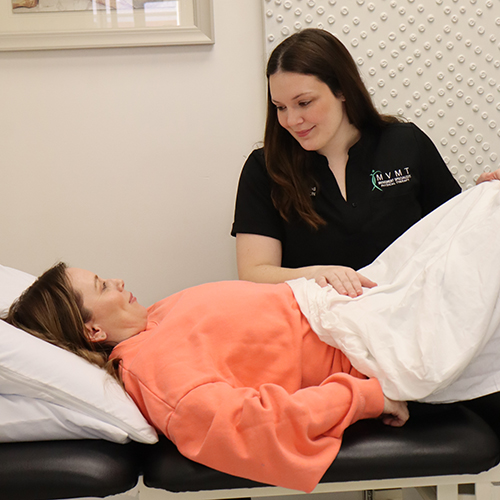
Treatment for pelvic health concerns varies depending on the cause. That’s why our team will spend your first session taking your health history, reviewing your symptoms, and running several screens so we can provide you with the interventions you need.
Here are some of the common treatment options we use to improve pelvic health:
• Pelvic Floor Exercises — We’ll show you tailored exercises designed to stretch and strengthen your pelvic floor muscles–and ensure you’re performing them correctly.
• Manual Therapy — Certain hands-on pain relieving techniques, such as myofascial release, can help ease muscle tension that can contribute to pelvic pain and dysfunction.
• Bladder Training — If you’re dealing with urinary incontinence (especially urge incontinence), bladder training can help you go longer between bathroom breaks.
• Lifestyle Modifications — We’ll help you find lasting relief by addressing other factors that might contribute to pelvic floor dysfunction, such as regular exercise, nutrition, and more.
Ready to Get Started?
At Movement Specialists Physical Therapy, we understand how challenging it can be to live with pelvic floor dysfunction. Worse, many people will suffer for years due to the shame surrounding common symptoms related to poor pelvic floor health.
We want you to know there’s nothing to be ashamed of — and our physical therapists have heard it all! Take control of your health and well-being, starting with your pelvic health. Call our clinic today to set up your initial consultation!

At Movement Specialists Physical Therapy, our Pelvic Health Program is specifically designed to support women’s health and wellness. This program focuses on addressing the unique needs of female patients, and our treatments are tailored accordingly. If you have any questions about our approach or whether our services are right for you, please feel free to contact us.
What Sort of Exercises Help the Pelvic Floor?
Your pelvic floor is a muscle like any other, which means exercise will help keep it in top shape! However, you may be wondering what exercises are most beneficial.
Here are some of our favorites to include in treatment plans, but do make sure to check with us before trying anything new:
Kegels
If you’re like most people, when you hear “pelvic floor exercises,” you probably think of Kegels, a technique for contracting and releasing the pelvic floor muscles. While beneficial, they can be tricky to perform correctly.
Fortunately, our team is on the case. We’ll walk you through the process and may use technology to ensure you’re working the correct muscle.
Squats
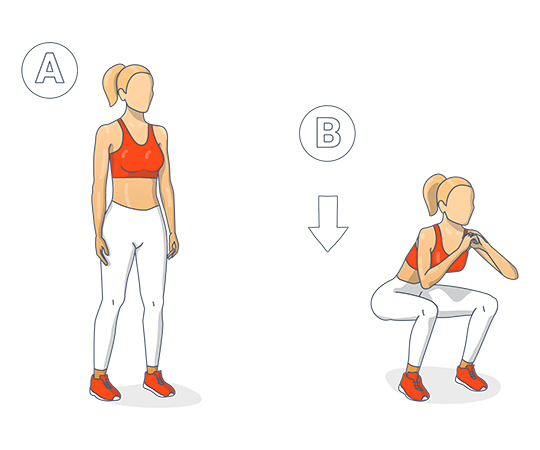
It’s true — the mighty squat works more than your glutes and hamstrings! To perform a bodyweight squat, stand hip-width apart, then bend your knees as if you’re going to sit in a chair (you can use a chair — sitting down and getting up without using your hands emulates a squat movement).
Glute Bridges
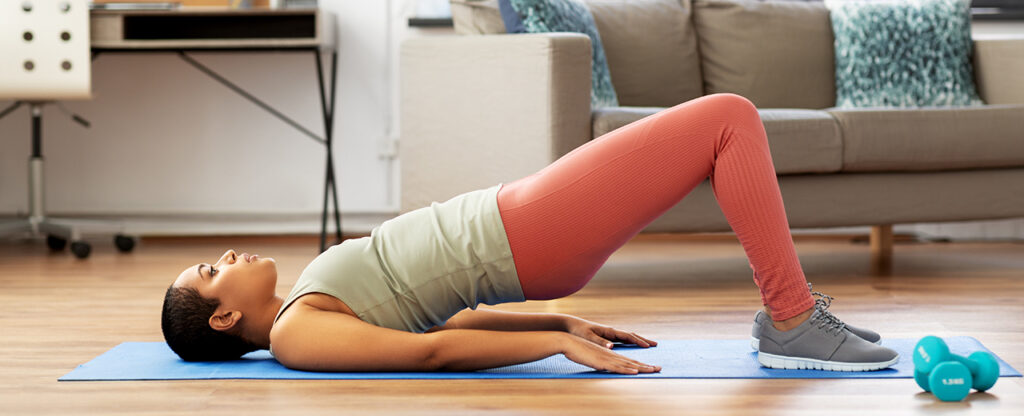
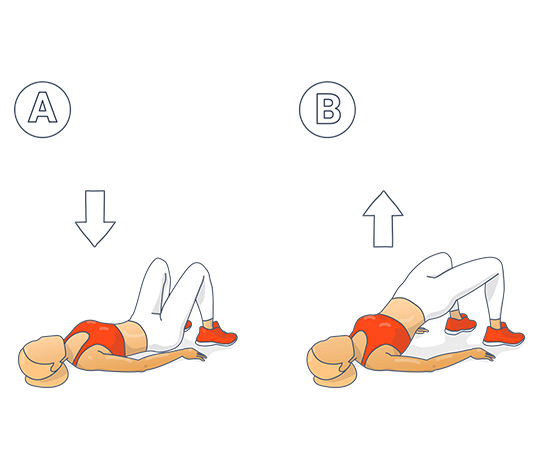
Glute bridges are another great exercise for targeting the core, glute, and pelvic floor muscles. They involve lying on your back with your knees bent, slowly lifting your hips up from the floor, and pressing down on your sides with your arms.
Get Your Own Unique Exercise Plan Today!
The best way to stretch and strengthen your pelvic floor is to make an appointment at Movement Specialists Physical Therapy. We’ll provide you with a personalized program designed to suit your needs. Call us today to get started!




Get Outdoors and Have Some Fun
With the warmer weather and longer days, getting outdoors is perfect for enjoying recreational activities. Here are some great ways to integrate outdoor activities into your weekly regimen:
- Pickleball for Agility: This fun and social sport improves balance and coordination. It’s low-impact, making it suitable for all ages and fitness levels.
- Golf for Mobility: Golfing is a great way to enhance mobility, especially in the hips and torso. It’s also a good walk, offering cardiovascular benefits.
- Walking for Endurance: Regular walks can significantly boost cardiovascular health and lower body strength, whether in a park or around your neighborhood.
Always listen to your body and consult your Movement Specialists Physical Therapy team to tailor these activities to your needs!
April is your opportunity to get outside, enjoy the sunshine, and take a step towards better health!

Feel Better by Eating Better!
Stir-Fry Rice Bowl
Looking for a quick, healthy, and satisfying meal? This Stir-Fry Rice Bowl is packed with fresh vegetables, warm brown rice, and a perfectly poached egg for a deliciously balanced dish. This meal is both comforting and nutritious — perfect for a busy weeknight dinner!
Try it out and enjoy a wholesome, homemade meal.
In a large skillet, heat canola oil over medium-high heat. Add carrots, zucchini and mushrooms; cook and stir for 3-5 minutes or until carrots are crisp-tender. Add bean sprouts, spinach, water, soy sauce and chili sauce; cook and stir just until spinach is wilted. Remove from heat; keep warm.
Place 2-3 in. water in a large skillet with a high side. Bring to a boil; adjust heat to maintain a gentle simmer. Break cold eggs, 1 at a time, into a small bowl; holding bowl close to surface of water, slip egg into water.
Cook, uncovered, 3-5 minutes or until the egg whites are completely set and the yolks begin to thicken but are not hard. Using a slotted spoon, lift eggs out of water.
Serve rice in bowls; top with vegetables. Drizzle with sesame oil. Top each serving with a poached egg.
Ingredients
- 1 tablespoon canola oil
- 2 medium carrots, julienned
- 1 medium zucchini, julienned
- 1/2 cup sliced baby portobello mushrooms
- 1 cup bean sprouts
- 1 cup fresh baby spinach
- 1 tablespoon water
- 1 tablespoon reduced-sodium soy sauce
- 1 tablespoon chili garlic sauce
- 4 large eggs
- 3 cups hot cooked brown rice
- 1 teaspoon sesame oil
Exercise of the Month
90/90 Hip Stretch
Start by sitting up straight on a mat. Take one leg and make your shin parallel with the front of the mat and your knee at a 90-degree angle with your leg on the mat. Place your other knee near your foot and aim your shin parallel with the side edge of the mat so your foot is pointing straight back and your knee is bent to about 90 degrees. Sit straight up and allow your hips to be stretched as they sink toward the mat in this position. 2 sets, 1 rep, 30 seconds hold.



Did You Know You Can See a Physical Therapist Without a Referral?
Not everyone knows you can go directly to your physical therapist if you are dealing with pain or an injury. It doesn’t matter if you’re dealing with an old or new problem. In all 50 states, you can schedule a visit with one of our therapists to get help sooner than later.
Direct Access is all about having the freedom to make your own decisions without being bound by outdated rules. It allows you to be in charge of your healthcare so you can focus on your recovery instead of waiting for another appointment to get you the help you need today!
Direct Access also helps you save money, schedule when you want, and speeds up your recovery so you can get relief and get back to doing what you love. If you have questions about Direct Access or would like to schedule an appointment with a physical therapist, contact Movement Specialists Physical Therapy now!
Let’s Get You Better ASAP!
Don’t let pain dictate your life. Take the first step towards reclaiming your mobility and well-being with our expert support. Start your journey to a healthier you today.