


A Deep Dive into ACL Injuries
What They Are and How Sports Medicine Can Help
— October Newsletter —
You’re racing across the field and quickly pivot to the left to avoid a collision with a player from an opposing team. But, at that moment, you hear a loud pop. Pain erupts in your knee, and you can no longer put weight on it.
You’ve just suffered an ACL injury, one of the more common sports injuries–particularly for those playing football, basketball, or soccer. These can be major injuries that require immediate medical attention.
Fortunately, Movement Specialists Physical Therapy offers same-day urgent care to help assess and diagnose sports injuries. We’ll provide any immediate treatment and let you know what your next steps need to be–in the case of an ACL injury, this is often surgery and then rehabilitation.
Today, we want to do a deep dive into ACL injuries: what they are, why they happen, and how we can set you on the road to recovery. And if you need any in-depth guidance, don’t hesitate to give us a call!
What Exactly Is an ACL Injury?
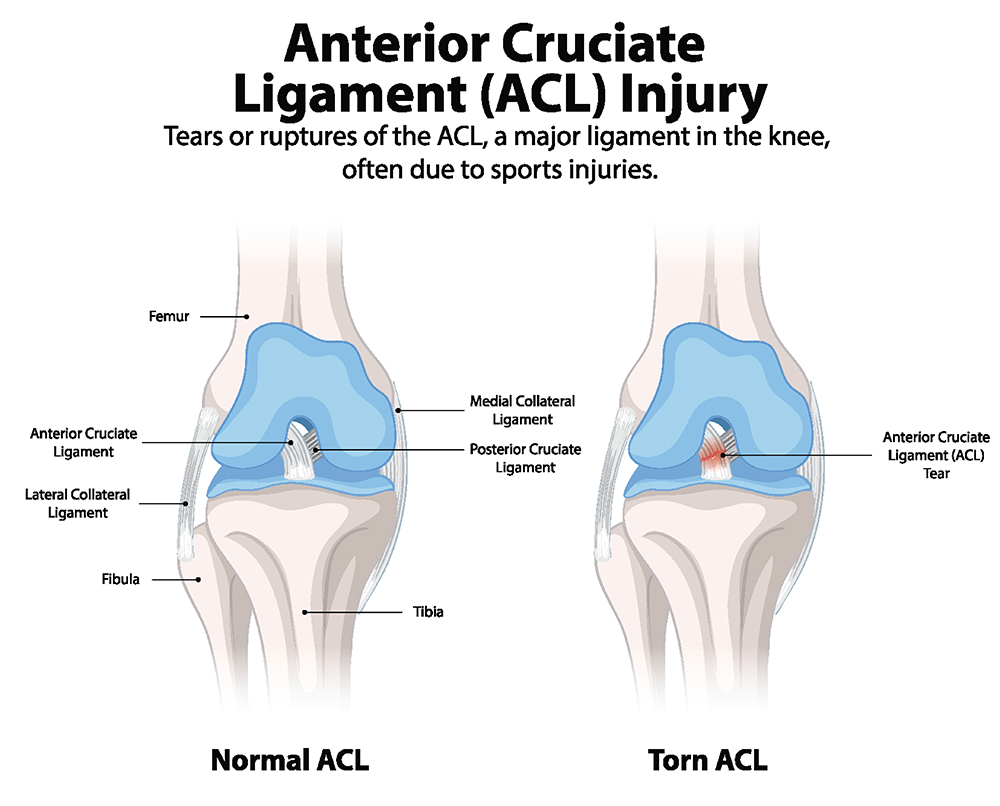
The ACL is one of four ligaments that make up your knee joint. It’s located inside the joint and crosses over another ligament, the PCL (posterior cruciate ligament). The ACL stabilizes the knee and prevents you from rotating the joint too far.
Athletes typically injure their ACL during sudden pivot or cutting movements, twisting the knee too far and causing the ACL to tear, either partially or completely. The following are signs that you may have suffered an ACL injury:
- Pain on the outside and back of the knee
- Significant swelling
- Loss of motion
- Inability to put weight on your leg
First Steps: What Do I Do When I Experience an ACL Injury?
If you suspect you’ve torn your ACL, it’s essential to perform first aid immediately after the injury:
- Rest and protect your injured knee. Don’t put weight on it.
- Ice the affected knee to help decrease pain and inflammation.
- Compress the affected knee with a bandage to reduce swelling.
- Keep your knee elevated.
Next, you should visit our same-day urgent care clinic, as we offer a faster and more personalized approach than an emergency room. There, we can confirm the exact nature of your injury. Our in-house X-ray service can rule out certain injuries, such as a bone fracture, and we can order additional testing to confirm a torn ACL.
We can also get you situated with braces or crutches to help protect your knee in the early days of your injury.
Next Steps: How Do I Treat an ACL Injury?
There are two main ways to treat ACL injuries:
- Conservative treatment involves extensive rehabilitation with a physical therapist, who will guide you through targeted exercises to improve the strength and mobility of your knee joint.
- Surgical treatment involves undergoing an ACL reconstruction, a procedure in which a surgeon removes the damaged ligament and grafts a new one crafted out of ligament tissue from elsewhere in your body.
The right treatment option for you will vary based on your injury’s severity and specific recovery goals. That said, surgery will likely be your best option if you’re an athlete whose sport requires a great deal of pivoting.
In either case, we can refer you to a physical therapist and/or an orthopedic surgeon to ensure you get the best treatment for your needs.
Furthermore, it’s important to understand that ACL injuries take a long time to fully rehabilitate, no matter your choice. While our team won’t guide you through the rehabilitation, we’ll provide additional support throughout the process.


How Can I Prevent an ACL Injury?
Taking the necessary steps to prevent an ACL injury is incredibly important, especially for athletes. Suffering one ACL tear increases the likelihood you’ll suffer another. It’s crucial that you get an annual sports physical to ensure you’re in the right condition to play your sport.
Our sports physicals go into far more depth than a typical doctor’s appointment, including evaluating your musculoskeletal system for potential issues. If we notice anything, we can refer you to a sports performance specialist to address it!
Whether you’ve just suffered an injury on the playing field or need to come in for your next sports physical, Movement Specialists Physical Therapy is here to help. Call us today to get started.
Tips for Strengthening Your Core
If you’ve been troubled by that nagging back pain, we’ve got some good news for you. Sometimes, the road to recovery is as simple as strengthening your core.
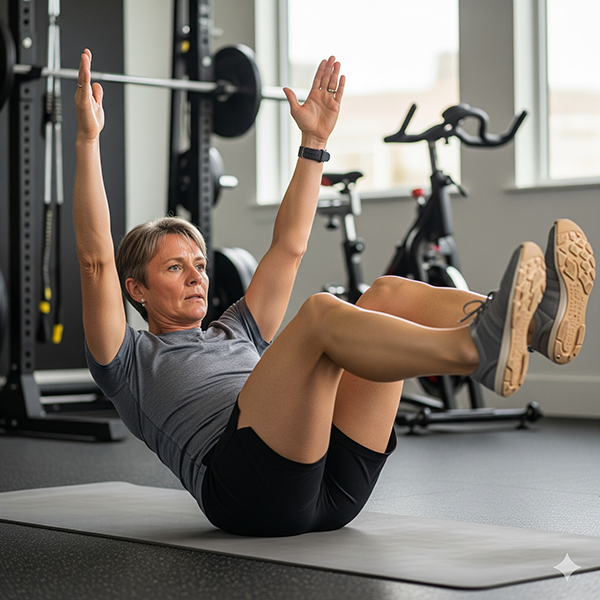
The term “core” refers to a group of muscles in your lower back and abdomen. These muscles are like the supporting pillars of your spine, helping you to maintain a good posture, balance, and function. Research has shown that a strong core may protect against back pain.
Some of the most effective core exercises our expert physical therapists often recommend are ones you can do right at home, including:
The Bird Dog
This exercise helps in improving stability and balance. Here’s how you can do it:
- Start with a hands-and-knee position, keeping your hands under your shoulders and knees under your hips.
- Extend one arm forward and the opposite leg backward at the same time, while keeping your spine straight.
- Hold the position 3-5 seconds before returning to the starting position and alternating to the other side.
- Repeat for 10 repetitions.
The Plank
This is a great all-round exercise that engages your whole core! Here’s how to nail it:
- Start on your hands and knees.
- Extend one leg back then the other so you are in a push-up position, keeping your body straight from head to heels.
- Hold this position for 10-30 seconds without letting your hips drop.
- Repeat 3-5 times.
Bridges
Bridges are perfect for strengthening your lower back and glutes. Here’s how they’re done:
- Lie on your back with your knees bent and feet flat on the ground.
- Lift your hips towards the ceiling, squeezing your glutes at the top.
- Hold for 10-30 seconds before lowering your hips back down.
- Repeat 10-20 repetitions.
Not only do these exercises promise to strengthen your core, but they also can help lead to a pain-free back. Remember, consistency is the key, so make it a part of your daily routine.
Ready To Kick That Back Pain To the Curb?
Our friendly physical Therapists at Movement Specialists Physical Therapy are here to assist you with more personalized strategies and treatments that are just right for you.
Why wait? Give us a call now and start on your journey to a healthier, happier spine. Together, we can make back pain a thing of the past!
Who do you know that needs our help?

Refer a Friend
Do You Have Friends or Family
Unable to Do The Following?
- Move without pain
- Bend and move freely
- Balance confidently and securely
- Sit for long periods comfortably
- Walk for long distances
- Live an active and healthy lifestyle
If you know someone suffering from aches and pains give the gift of health. Refer them to Movement Specialists Physical Therapy today. Forward this newsletter or have them call us directly for a physical therapy consultation.
Patient Success Stories
“I chose MVMT after having reconstructive ACl and Meniscus surgery and it was the best decision ever. It’s a fun, diverse environment with great energy. The staff is very knowledgeable and works with you on your place to achieve your mobility goals.”
-A.B.

It’s Scary Season! Have a Sweet Treat!

Pumpkin Cookies
Ingredients:
- Spiced Sugar: 1/4 cup (50g) granulated sugar, 1/2 tsp pumpkin pie spice
- Cookies: 3/4 cup (168g) unsalted butter (softened), 1 cup (220g) packed light brown sugar, 2 egg yolks (room temp), 2 tsp vanilla, 1/2 cup (122g) canned pumpkin puree, 1 3/4 cups (219g) all-purpose flour, 1 tbsp pumpkin pie spice, 1/2 tsp baking soda, 1/2 tsp baking powder, 1/2 tsp salt
Directions:
- Preheat the oven to 350°F (175°C). Line two baking sheets with parchment paper.
- In a small bowl, mix the granulated sugar and 1/2 tsp pumpkin pie spice. Set aside.
- Spread pumpkin puree on a plate and blot with a paper towel to remove excess moisture. Repeat several times until the pumpkin is reduced to about 1/4 cup.
- In a separate bowl, whisk together the flour, 1 tbsp pumpkin pie spice, baking soda, baking powder, and salt.
- In a large bowl, cream the butter and brown sugar until light and fluffy.
- Add the egg yolks and vanilla, mixing well. Mix in the dried pumpkin.
- Gradually add the dry ingredients to the wet mixture, mixing just until combined.
- Scoop the dough into 18 balls. Roll each ball in the spiced sugar.
- Place dough balls 2 inches apart on the baking sheets and bake for 12-14 minutes.
- Let cool on the baking sheet for 5 minutes before transferring to a cooling rack. Enjoy after they have cooled for at least 15 minutes.

Did You Know You Can See a Physical Therapist Without a Referral?
Not everyone knows you can go directly to your physical therapist if you are dealing with pain or an injury. It doesn’t matter if you’re dealing with an old or new problem. In all 50 states, you can schedule a visit with one of our therapists to get help sooner than later.
Direct Access is all about having the freedom to make your own decisions without being bound by outdated rules. It allows you to be in charge of your healthcare so you can focus on your recovery instead of waiting for another appointment to get you the help you need today!
Direct Access also helps you save money, schedule when you want, and speeds up your recovery so you can get relief and get back to doing what you love. If you have questions about Direct Access or would like to schedule an appointment with a physical therapist, contact Movement Specialists Physical Therapy now!
Let’s Get You Better ASAP!
Don’t let pain dictate your life. Take the first step towards reclaiming your mobility and well-being with our expert support. Start your journey to a healthier you today.