


Does Stress Cause Neck Pain?
Does stress cause neck pain? The short answer is no! At Movement Specialists Physical Therapy, we like to say “contributes to” instead of “cause.” The casual way healthcare professionals throw around terms can lead to confusion and, worse still, ineffective treatment. Fortunately, our highly skilled therapists know how to dig deep and find the root cause of your neck pain, and this information helps you find relief!
Let’s discuss Nicole, a 40-something-year-old working mother of three. Nicole was used to being very active, balancing her work schedule with getting her kids to all the various activities and school functions that come with being a mom nowadays.
Her neck pain first started as a crick in the neck when she woke up one morning. As the day progressed from driving her kids around to sitting at her desk, she noticed turning her head became more difficult and painful, making focusing on work nearly impossible.
Nicole struggled to figure out why her neck started hurting and came to the conclusion that stress “must be” the culprit. The more pain and difficulty moving she had, the more convinced she was that stress was to blame.

Understanding Nicole’s Neck Pain
One of the most common things we hear from our patients is that their pain started for “no apparent reason.” Like Nicole, people will wake up with a crick in their neck or notice a stiffness turning when driving in the car. It is also common for people to notice tightness in their upper back and neck after a long day.
So, what is actually the source of the pain? In most cases, there is an issue with the neck joints or the neck muscles due to prolonged positions. Our neck joints don’t like remaining in any position for extended periods. In Nicole’s case, she first noticed her pain in the morning, which may have been related to her neck position while sleeping. It is also important to note that in Nicole’s case, the first sign of any issue was in the morning when she woke up, unrelated to stress.
As Nicole’s day progressed, her pain got worse. But this also was more likely related to how she held her neck while driving or sitting at her computer. In both cases, her posture, specifically how she held her neck, seems to have contributed to her pain. Prolonged sitting can lead to a forward head position, resulting in tension to soft tissue (i.e., muscles, tendons, and ligaments) or negative changes to our blood flow.
The muscles of our neck function best when we move them. So, holding her head in one position likely led to irritation of the muscles and affected her ability to move her neck, which in turn caused stress.
Stress “contributes” to neck pain because, when we experience stress, our bodies naturally respond by tensing up as a protective measure. This tension can lead to discomfort, particularly in the neck and upper back region. Research studies have found that individuals with higher stress levels reported increased neck pain as compared to those with lower stress levels. This is why we say “contributes” to, but not the cause of, neck pain.
How Physical Therapy Can Help Alleviate Neck Pain
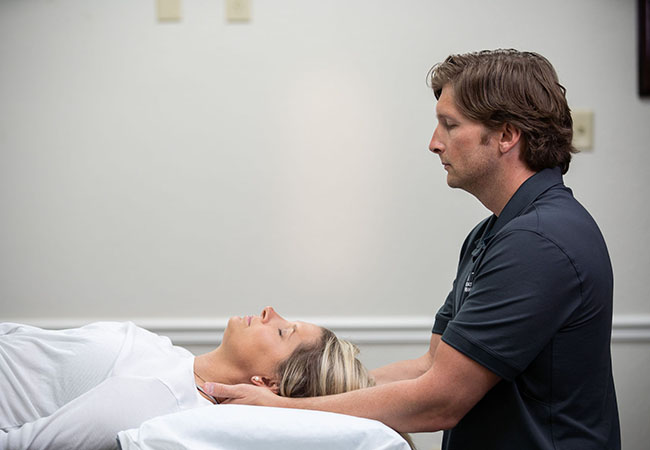
We will target the source of your pain by performing a thorough examination, starting with your medical history and details about how, when, and where your symptoms began. As we saw with Nicole, determining how, when, and why the pain started helps us eliminate possibilities and get to the actual root cause(s).
Our therapists will also analyze your posture and movement to identify any limitations or restrictions contributing to your condition. We’ll use this information to design a program that addresses your specific needs.
Our treatment plans focus on relieving your pain and improving your posture, mobility, strength, etc., and educating you about managing your symptoms. Your program will likely include manual therapy (i.e., soft tissue work and/or joint mobilizations), targeted stretches, exercises, activity modification, or posture recommendations.
We’ll listen to your unique situation and specific issues and then work to help you find relief and get back to your normal routine.
Book Your Appointment Today!
If you’re dealing with neck pain or looking for someone to help you figure out what is causing your issues, call us today and set up a consultation!

Unconventional Yet Effective Solutions for Neck Pain
Do you ever wake up with a stiff neck and wonder why it keeps happening? You’re not alone. Neck pain is pretty common, and it can be super annoying. But guess what? There are solutions, including some more unusual ones you may not have heard about yet.
Our therapists at Movement Specialists Physical Therapy use cutting-edge approaches to ensure you find the most effective ways to find lasting relief!
How to Help Your Neck Pain — Tips You May Not Know
Tackling neck pain is not just about focusing on the neck itself. By implementing these unconventional yet scientifically-backed recommendations into your daily routine, you’re setting yourself on a path toward relief and lasting wellness.
Lumbar Support Can Alleviate Neck Pain
The way your lower back is positioned has a big effect on your neck. Using lumbar support can help you sit up straight, letting your neck sit over your shoulders like it should.
When you know you will be sitting for a while, whether at work or in the car, use a rolled-up towel or buy a lumbar roll to put in your lower back. Even though you’re changing the lower back position, your neck will thank you!
Why Thoracic Mobility Matters
The thoracic spine consists of the 12 vertebrae in your mid-back. It plays a critical role in your overall spinal function. When this area is stiff or restricted, your neck compensates by moving more than it should. This often leads to a forward head posture, which can strain the neck muscles and lead to long-term pain.
Mind-Body Connection
Believe it or not, the state of your mind can also help heal your neck pain. Research has shown that stress can intensify pain, so techniques like mindfulness and breathing exercises can help reduce stress levels. Just a few minutes a day of deep breathing can go a long way.
Using unconventional techniques like lumbar support, thoracic mobility exercises, and even mindfulness can help you feel better faster. Why not give these unconventional methods a try? Your neck will be happier for it!

congratulations!
Big congratulations to our amazing PT, Morgan, who tied the knot last Saturday! 🎉
Here’s a beautiful snapshot of Morgan and her husband, Lex, celebrating their special day alongside two of our fantastic techs, Christian and Lane. We’re so thrilled to celebrate this exciting new chapter in Morgan’s life and couldn’t be happier for her!


Feel Better by Eating Better!
Roasted Root Vegetables
- 12 oz rutabaga, peeled & cut into ¾-inch pieces
- 8 oz celery root, peeled & cut into 1-inch pieces
- 8 oz peeled baby carrots
- 8 oz fingerling potatoes
- 3 medium parsnips, peeled & cut into 1-inch-thick slices
- 1 medium fennel bulb, cored & cut into thin wedges
- 2 shallots, peeled & cut into thin wedges
- 2 tbsp olive oil
- ½ tsp salt
- ½ tsp ground pepper
Preheat oven to 325°F. Combine rutabaga, celery root, baby carrots, fingerling potatoes, parsnips, fennel, and shallots in a shallow roasting pan. Add oil, salt, and pepper; toss to coat. Bake, uncovered, for 1 hour, stirring occasionally. Increase oven temperature to 425°F. Bake, uncovered, about 10 minutes more or until the vegetables are tender and lightly browned.
Exercise of the Month
Cervical Retraction and Extension With Towel
Start by standing up straight. Wrap a towel around the back of your head and hold the ends with both hands in front of you. Tuck your chin, pushing your head back into the towel and then raise your chin up towards the ceiling against the towel. Return to start. Repeat 3 sets, 10 reps each.



Did You Know You Can See a Physical Therapist Without a Referral?
Not everyone knows you can go directly to your physical therapist if you are dealing with pain or an injury. It doesn’t matter if you’re dealing with an old or new problem. In all 50 states, you can schedule a visit with one of our therapists to get help sooner than later.
Direct Access is all about having the freedom to make your own decisions without being bound by outdated rules. It allows you to be in charge of your healthcare so you can focus on your recovery instead of waiting for another appointment to get you the help you need today!
Direct Access also helps you save money, schedule when you want, and speeds up your recovery so you can get relief and get back to doing what you love. If you have questions about Direct Access or would like to schedule an appointment with a physical therapist, contact Movement Specialists Physical Therapy now!
Let’s Get You Better ASAP!
Don’t let pain dictate your life. Take the first step towards reclaiming your mobility and well-being with our expert support. Start your journey to a healthier you today.